
|
|
|
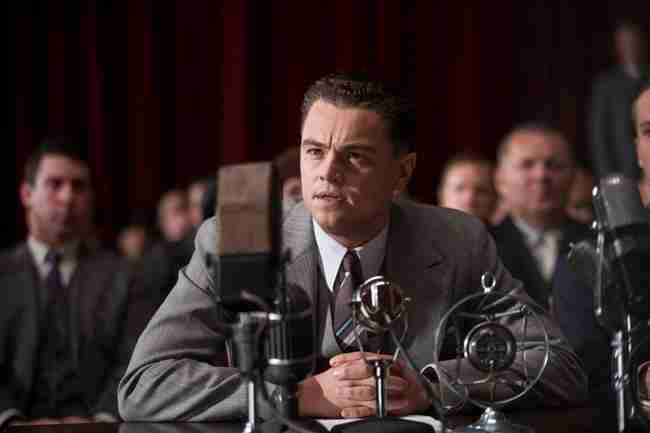
By Matt Neufeld November 9, 2011 John Edgar Hoover, who came to be known as J. Edgar Hoover, firmly stands as one of the most bizarre, deranged, complex and dangerously corrupt politicians of the 20th century—right along his political dirty tricks foxhole companions Richard M. Nixon and Joe McCarthy. A quick perusal of numerous articles and reports about the horrendous actions of the shameful Hoover in office backs up the scores of allegations that Hoover was indeed paranoid, power-mad, untruthful, obsessive about non-relevant matters, possibly racist, blind to changes in popular and political cultures, contradictory, hypocritical, possibly criminal in some of his actions, and definitely purely corrupt to the core. It’s that attention to human detail that permeates “J. Edgar.” Additionally, accolades should be sent to the production design team, for painstakingly depicting elaborate period details—hair styles, clothes, cars, furniture, props—in various settings, from the 1920s on up to the early 1970s. And if you look closely, you can see the attention to period details in all of these areas. Additionally, Black’s screenplay should be noted for his attention to historical detail, the scope of the story, and the difficulty in presenting such psychologically complex characters. Naomi Watts as Hoover’s fiercely loyal secretary Helen Gandy and Judi Dench as Hoover’s domineering but caring mother round out the principal cast. The film was produced by Eastwood, Brian Grazer (“A Beautiful Mind,” “Frost/Nixon”) and Robert Lorenz, who worked with Eastwood on the Eastwood-directed “Letters from Iwo Jima” and “Mystic River.” Interestingly, in a real-life twist that’s not portrayed in the film, one of Hoover’s long-running associates at the FBI, W. Mark Felt, succeeded Clyde Tolson as the FBI’s Associate Director in the wake of Hoover’s death in 1972. Felt, in a nice twist that would make a great story for another film, turned out to be the “Deep Throat” source for information on the Watergate scandal for Washington Post reporters Bob Woodward and Carl Bernstein. That valuable information from Felt—valuable FBI secrets–helped lead to the subsequent resignation of President Richard Nixon. J. Edgar (137 minutes, at area theaters) is Rated R for brief strong language. Matt Neufeld is a longtime journalist, actor and film critic in the Washington and Baltimore areas. He has participated in many local film events and projects in the region, and he has appeared as an actor, supporting actor and extra in more than 45 films projects, at all levels, during the past 20 years. He was previously a daily local news reporter and features writer for The Washington Times and The Frederick News-Post, and he was the media relations publicist for The Washington Performing Arts Society. Matt is currently the News Editor for Carroll Publishing in Bethesda. |
Film Review J. EDGARWashington Film Institute2011-11-08T22:56:33+00:00